The Story Behind Tilak Before Tying Rakhi
Learn why tilak is applied before tying Rakhi, its spiritual meaning, the importance of roli and chawal, and how this beautiful Raksha Bandhan ritual is performed.
Why Is Tilak Applied Before Tying Rakhi? Meaning & Importance Explained
Quick Answer
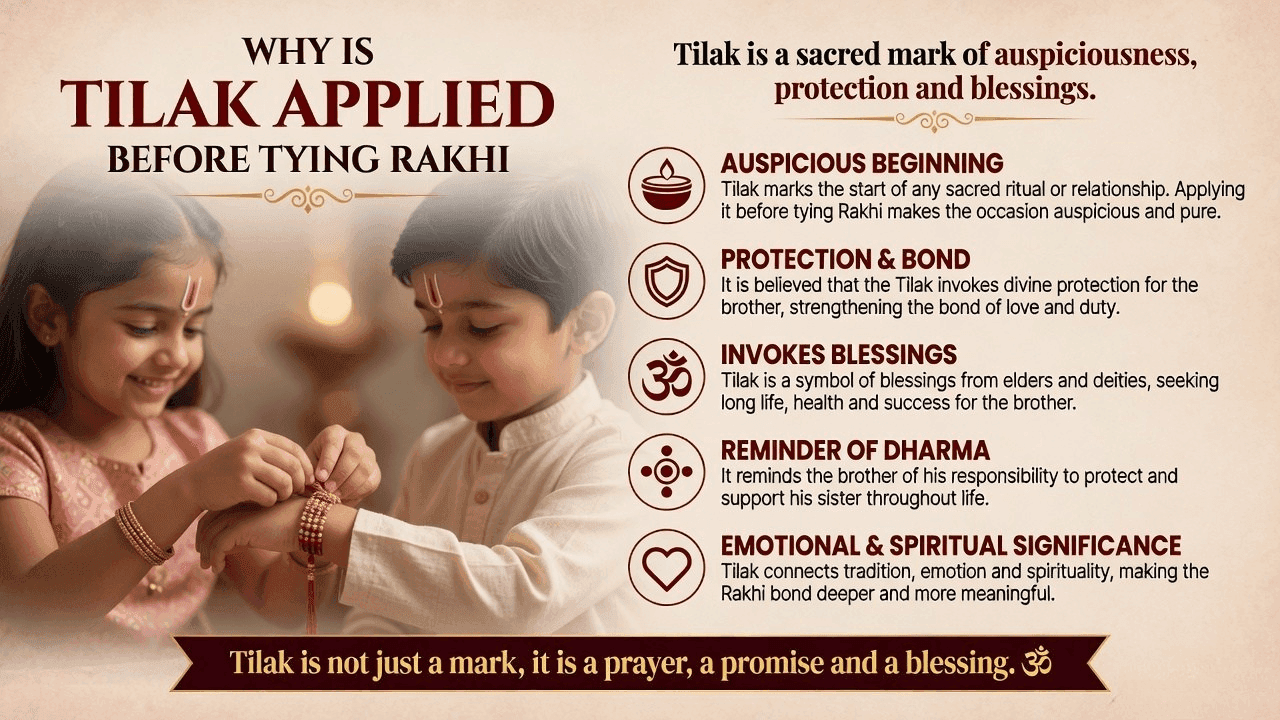
Tilak is applied before tying Rakhi as a symbol of love, blessings, respect, and good wishes. It is an important part of the Raksha Bandhan ritual. Sisters apply a tilak of roli (kumkum) and chawal (rice) on their brother's forehead before tying the Rakhi. The tilak is believed to bring positivity, happiness, success, and protection. It also makes the Rakhi ceremony complete and meaningful.
Key Takeaways
Tilak is one of the most important rituals of Raksha Bandhan.
It is applied before tying the Rakhi.
Roli and chawal are traditionally used to make the tilak.
The tilak represents blessings, respect, love, and good fortune.
Every family may follow the ritual in a slightly different way, but the meaning remains the same.
Table of Contents
What Is Tilak?
Why Is Tilak Applied Before Tying Rakhi?
What Do Roli and Chawal Mean?
Why Is Tilak Important in Raksha Bandhan?
Step-by-Step Rakhi Tilak Ritual
Different Traditions Across India
Common Mistakes to Avoid
Choosing the Perfect Rakhi
Conclusion
Raksha Bandhan Is More Than Just Tying a Rakhi
Raksha Bandhan is one of India's most loved festivals.
It celebrates the special bond between brothers and sisters.
Many people know that sisters tie a Rakhi on their brother's wrist.
But before tying the Rakhi, sisters first apply a tilak on the brother's forehead.
Have you ever wondered why?
The tilak is not just a tradition.
It carries deep meaning and makes the ceremony complete.
What Is Tilak?
Tilak is a small mark applied on the forehead during religious ceremonies and festivals.
It is usually made using:
Roli (Kumkum)
Chawal (Rice)
Sandalwood paste (in some families)
Tilak is considered a symbol of blessings, purity, respect, and positive energy.
People apply tilak during festivals, weddings, pujas, and many other special occasions.
Why Is Tilak Applied Before Tying Rakhi?
The tilak is applied before tying Rakhi to bless the brother.
It is a way for sisters to pray for:
Good health
Long life
Success
Happiness
Prosperity
Protection
Applying tilak also shows love and respect.
It prepares the brother for the Rakhi ceremony and makes the ritual feel complete.
Only after applying the tilak do sisters tie the Rakhi on the wrist.
What Do Roli and Chawal Represent?
The two most important items used for tilak are roli and chawal.
Roli
The red color of roli represents:
Good luck
Strength
Love
Positive energy
It is considered very auspicious in Hindu traditions.
Chawal (Rice)
Rice is a symbol of:
Prosperity
Peace
Purity
Blessings
After applying roli, sisters place a few grains of chawal on the tilak.
Together, they represent complete blessings for the brother.
Why Is Tilak Important During Raksha Bandhan?
Without tilak, many families feel that the Rakhi ceremony is incomplete.
The tilak reminds everyone that Raksha Bandhan is not only about gifts.
It is about:
Love
Family
Blessings
Respect
Togetherness
The ritual creates a peaceful and happy atmosphere before the Rakhi is tied.
Step-by-Step Rakhi Tilak Ceremony
Following the Raksha Bandhan ritual is simple.
Step 1
Prepare a Rakhi thali with:
Rakhi
Roli
Chawal
Diya
Sweets
Flowers
Step 2
Light the diya.
Step 3
Apply the roli tilak on your brother's forehead.
Step 4
Place a few grains of chawal on the tilak.
Step 5
Tie the Rakhi on your brother's wrist.
Step 6
Perform the aarti.
Step 7
Offer sweets.
Step 8
Pray for your brother's health, success, and happiness.
The ceremony ends with smiles, gifts, and family celebrations.
Different Traditions Across India
Every family celebrates Raksha Bandhan in its own way.
Some families use sandalwood paste instead of roli.
Some add flowers and coconut to the Rakhi thali.
Others include homemade sweets or dry fruits.
Although traditions may be different, the message remains the same—love, blessings, and togetherness.
Common Mistakes to Avoid
Many people forget small details during the ceremony.
Here are a few simple tips:
Keep the Rakhi thali ready before starting.
Use fresh roli and clean chawal.
Light the diya carefully.
Tie the Rakhi gently.
Spend time with your family instead of rushing through the ritual.
The most important part of Raksha Bandhan is celebrating with love and respect.
Choosing the Perfect Rakhi
After applying the tilak, choosing the right Rakhi makes the celebration even more special.
Popular choices include:
Designer Rakhi
Silver Rakhi
Personalised Rakhi
Bracelet Rakhi
Bhaiya Bhabhi Rakhi
Kids Rakhi
A thoughtful Rakhi shows how much you care about your brother.
Why Buy Rakhi Online?
Shopping online gives you more choices and saves time.
At OnlineRakhi.in, you can explore a beautiful collection of:
Designer Rakhi
Silver Rakhi
Personalised Rakhi
Bracelet Rakhi
Bhaiya Bhabhi Rakhi
Kids Rakhi
Rakhi Gift Combos
Chocolates
Dry Fruits
Greeting Cards
Whether your brother lives nearby or abroad, ordering online makes Raksha Bandhan simple and convenient.
Conclusion
Tilak is much more than a small mark on the forehead.
It is a symbol of love, blessings, respect, and good wishes.
Applying tilak before tying Rakhi makes the Raksha Bandhan ceremony complete and meaningful.
The combination of roli, chawal, Rakhi, prayers, and family togetherness creates beautiful memories that last forever.
This Raksha Bandhan, prepare your Rakhi thali with care, choose a beautiful Rakhi, and celebrate the special bond between brothers and sisters with love, happiness, and heartfelt blessings.
About the Author
Pandit Rajeev Bhardwaj
Frequently Asked Questions
Why is tilak applied before tying Rakhi?
Tilak is applied before tying Rakhi to bless the brother with good health, happiness, success, and prosperity. It is a traditional part of the Raksha Bandhan ceremony and symbolizes love, respect, and positive energy.
What is the importance of tilak in Raksha Bandhan?
The tilak represents blessings, purity, and good fortune. Applying it before tying Rakhi makes the ritual complete and expresses a sister's prayers for her brother's well-being.
Why are roli and chawal used during the Rakhi ceremony?
Roli symbolizes strength, love, and auspiciousness, while chawal (rice) represents peace, prosperity, and purity. Together they are used to bless the brother before tying the Rakhi.
What is the correct order of the Rakhi ceremony?
The traditional order is: Light the diya. Apply roli tilak. Place chawal on the tilak. Tie the Rakhi. Perform aarti. Offer sweets. Exchange gifts and blessings.
Can I tie Rakhi without applying tilak?
Yes. While tilak is an important tradition in many families, the true spirit of Raksha Bandhan is the love and bond between siblings. Customs may vary from family to family.
Comments (0)
Please log in to post comments and replies.